Peak season is over.
Now operations teams are asking harder questions:
- Why are handling costs rising?
- Why are returns slowing inventory velocity?
- Why are labor-heavy workflows eroding margins?
- Why does every special project feel like an exception?
In Q1, brands don’t just review performance.
They redesign operations.
And that’s where value-added 3PL services stop being optional — and start becoming a competitive advantage.
Most 3PLs Ship Boxes. Few Engineer Operations.
Traditional 3PL models focus on storage and pick-pack-ship efficiency.
But real-world operations include:
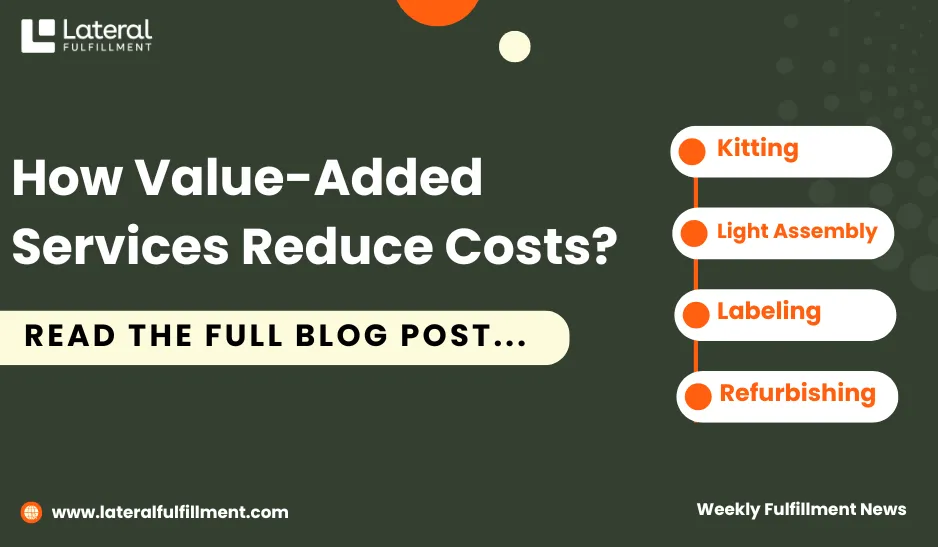
- Kitting & multi-SKU bundling
- Retail compliance prep
- Labeling & relabeling
- Light assembly
- Refurbishment & quality inspection
- Service parts management
- VMI & just-in-time workflows
- Production support
When these processes are treated as “exceptions,” they become expensive.
When the operating model includes them by design, they drive margins.
What Value-Added 3PL Actually Means
At Lateral, value-added services are not side projects. They are integrated operational workflows.
Core Capabilities
Kitting & Assembly
- Multi-SKU bundles
- Subscription builds
- Retail display prep
- Promotional packaging
Manufacturing Support
- Light assembly
- Sequencing
- Supplier / inbound coordination
- VMI programs
- Point-of-use delivery
Reverse Logistics & Refurbishment
- Returns inspection
- Warranty management
- Repair & repackaging
- Recovery acceleration
Custom Packaging & Compliance
- Retail-ready labeling
- Omnichannel compliance
- Quality-focused inspections (regulated industries)
This model supports both:
- Ecommerce (DTC + marketplace)
- Mexico domestic distribution
- Mexico → U.S. B2B
- Maquila channel operations
- Service parts & aftermarket programs
It is not ecommerce-only.
It is operational engineering.
Why Nearshore Makes This Structurally Different
Labor-intensive workflows are expensive in the U.S.
In a nearshore model, they become scalable.
Operating from the San Diego–Tijuana corridor enables:
- Up to 30% savings in labor and warehousing
- Flexible workforce scaling for seasonal surges
- Integrated bonded / IMMEX duty deferral
- 1–3 day U.S. delivery coverage
- Cross-border B2B distribution without fragmentation
Instead of outsourcing complexity across multiple vendors, you centralize it within one engineered system.
That changes the unit economics.
Real-World Impact of Nearshore 3PL
Case: High-Volume Production Support
One production support program processed more than 5 million orders in the first 45 days — maintaining accuracy, speed, and cost efficiency during surge demand.
Case: Reverse Logistics Optimization
By switching to a nearshore model, a global tech company moved its returns and packaging work closer to customers. As a result, it reduced warehousing and labor costs by up to 30%. It also sped up return cycles and improved cash flow.
Case: Omnichannel Ecommerce
A fast-growing DTC group achieved:
- 99.9% inventory accuracy
- 1–2 day U.S. shipping
- Up to 30% logistics savings
- Scalable multi-SKU fulfillment
Value-added services were not the extra feature.
They were the operating lever.
Where This Matters Most in Q1
Q1 is when companies:
- Reevaluate 3PL contracts
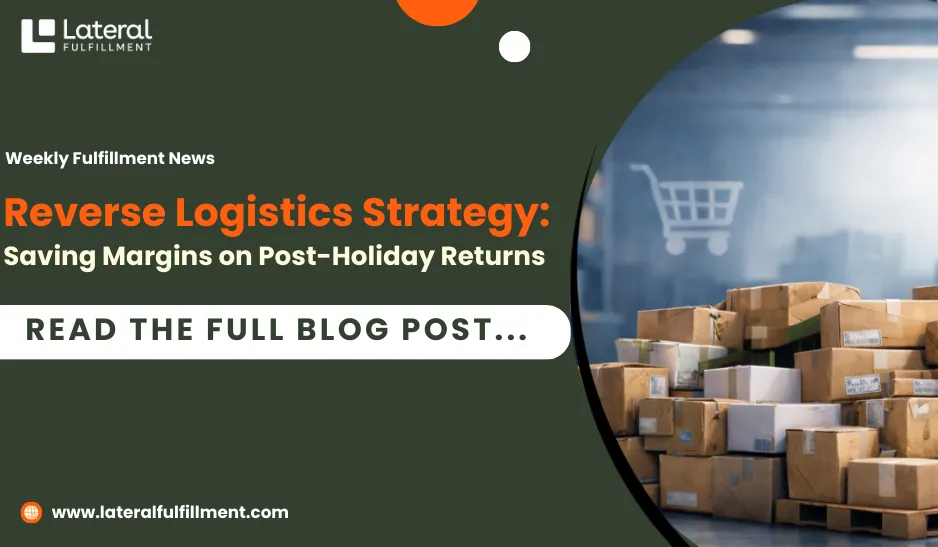
- Clean up post-peak returns
- Reset budgets
- Reduce tied-up capital
- Redesign cross-border strategies
Value-added services impact:
- Handling cost per SKU
- Return recovery speed
- Working capital cycle
- Inventory accuracy
- SLA compliance
- Labor exposure
This is not about packaging aesthetics.
Operational control and financial performance are the focus.
Ecommerce + B2B + Manufacturing Under One Model
Many providers specialize in one of these:
- Ecommerce fulfillment
- Manufacturing support
- B2B distribution
Hardly any integrate all three.
A nearshore 3PL built for value-added operations allows:
- Ecommerce brands to manage complex workflows without U.S. cost inflation
- B2B distributors to consolidate cross-border inventory
- Manufacturers to externalize labor-heavy subassembly and service parts logistics
When fulfillment and production-adjacent operations sit in separate silos, inefficiencies multiply.
When they operate under one engineered system, margins stabilize.
Is your 3PL built for operational engineering?
If your operation includes:
- Labor-intensive kitting
- Retail compliance requirements
- Reverse logistics complexity
- Service parts programs
- Light manufacturing support
- Cross-border B2B distribution
You don’t just need a warehouse.
You need a 3PL built to engineer operational complexity — not avoid it.
Final Thought
Fulfillment is no longer just about shipping faster.
It’s about:
Lower operating costs.
Stronger cash flow.
Scalable infrastructure.
Cross-border agility.
The companies that win in Q2, Q3, and Q4
make their operational redesign decisions in Q1.
If you’re reviewing your 3PL structure or looking to reduce labor-heavy operational costs:
Book a Value-Added Operations Assessment.
Let’s map where value-added workflows can improve margins, accelerate recovery cycles, and simplify your cross-border model.