
Custom packaging retention is one of the best ROI investments a DTC brand can make. It is also one of the most underestimated. The moment a customer opens your package is the only time in your post-purchase journey with their full attention.
No algorithm. No competing notifications. No distractions. Just your brand and your customer.
Most brands treat that moment as logistics. The brands building lasting customer relationships treat it as a marketing channel — one that runs at the exact moment purchase intent is highest and emotional connection is most accessible.
Here is what the data says, what the strategy looks like, and how DTC brands are using the unboxing experience to drive measurable retention outcomes.
Why the Unboxing Moment Drives Custom Packaging Retention
Retention starts before the second purchase. It starts the moment the first purchase arrives.
Customer psychology research consistently shows that the post-purchase experience — specifically the physical receiving and opening of an order — has an outsized influence on repurchase intent. A customer who has a memorable unboxing experience is more likely to share it, remember it, and return because of it.
The numbers support this. Studies on ecommerce consumer behavior show that:
- 40% of consumers say they would share a product on social media if it came in branded or gift-like packaging
- 52% of online shoppers say they are likely to make repeat purchases from a brand that delivers premium packaging
- Unboxing content on YouTube generates billions of views annually — making it one of the few post-purchase experiences that functions simultaneously as organic marketing
What these numbers reflect is a simple truth: packaging is not the container. It is the first physical expression of your brand that your customer touches. And in DTC commerce — where the relationship is direct and the differentiation is earned, not inherited from retail shelf placement — that expression carries significant weight.
Custom Packaging Retention as a Competitive Advantage
In a market where product quality and price have converged across categories, the experience of receiving and opening your product is one of the few remaining dimensions where a brand can create genuine differentiation.
The brands that understand this are not spending more on packaging — they are spending more intelligently. The goal is not luxury for its own sake. It is intentional brand expression that creates an emotional moment your customer associates with your product every time they use it.
The Commoditization Problem
Consider two brands selling identical skincare products at the same price point. Brand A ships in a plain brown box with a printed label. Brand B ships in a custom-printed box with tissue paper, a branded thank-you card, and a small sample of a complementary product.
The product is the same. The price is the same. But the experience — and therefore the perceived value — is not. Brand B has created a memory. Brand A has completed a transaction.
Over time, that difference compounds directly into customer lifetime value. Custom packaging retention is not a branding exercise. It is a revenue strategy.
The Social Amplification Effect
Branded packaging does something no paid channel can replicate: it turns your customer into a distributor of your brand experience. When a customer photographs, videos, or shares their unboxing moment — on Instagram, TikTok, YouTube, or in a text to a friend — your packaging travels further than the product.
This is not accidental. It is designed. The brands generating consistent unboxing content from their customers built that outcome into their packaging decisions: the right tissue color, the right reveal moment, the right insert that makes the experience worth sharing.
The Components of a Custom Packaging Retention Strategy
Effective unboxing design is not about spending more. It is about sequencing the customer’s experience intentionally from the moment they pick up the package to the moment they first use the product.
1. The Outer Box
First impression. Custom printing, brand colors, and considered structural design signal product quality before the box is opened. A plain brown box communicates logistics. A branded box communicates intention.
The outer box does not need to be expensive to be effective. Spot color printing on kraft board, a single brand element, or a consistent logo placement can shift perception without significantly impacting unit cost.
2. The Interior Reveal
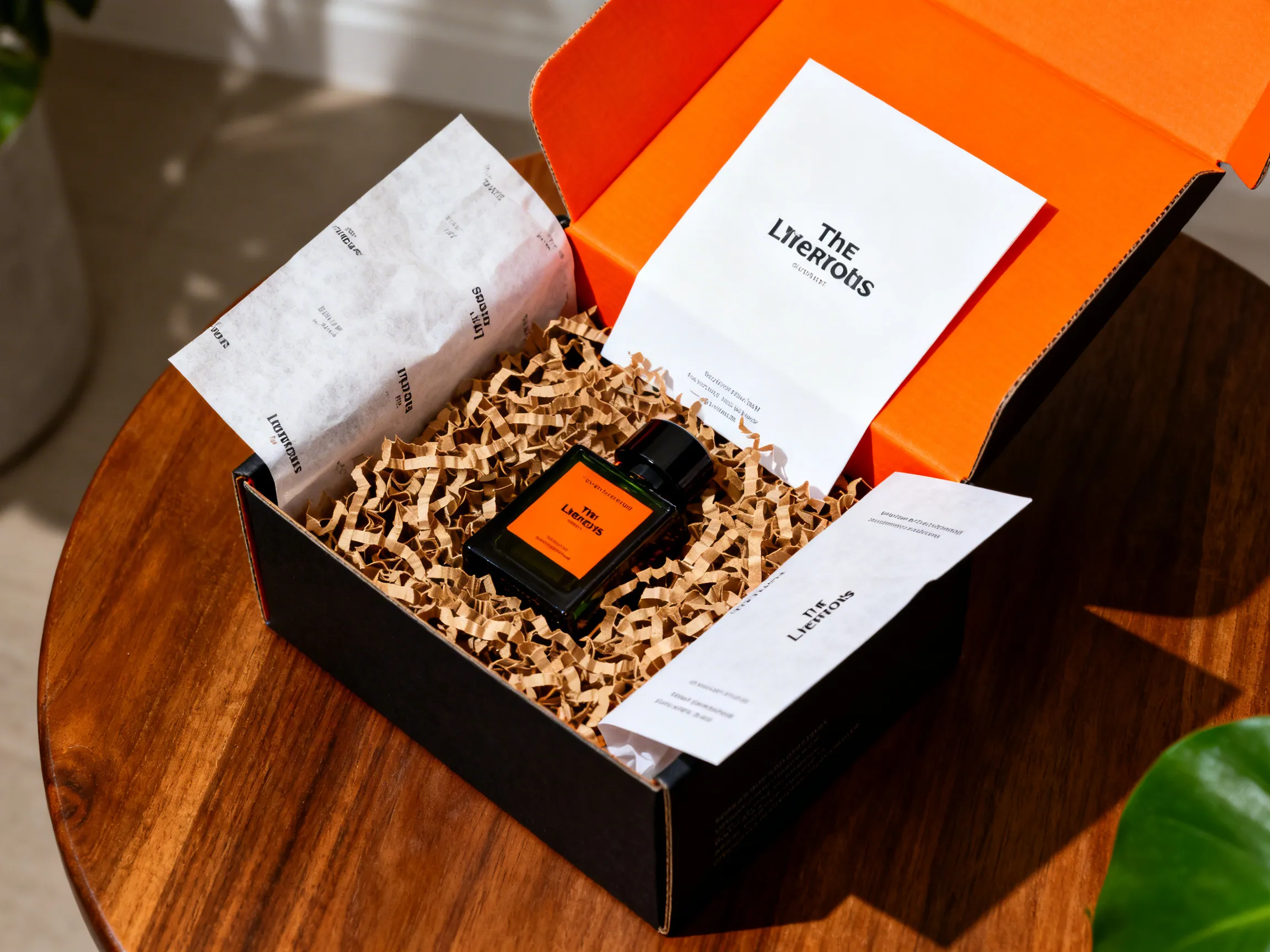
What happens when the box opens is the actual unboxing experience. Tissue paper, crinkle fill, a branded liner, or a custom insert tray create a reveal moment that elevates perceived product value.
The interior reveal is also where custom packaging retention strategy earns its ROI: a customer who pauses at the opening — who has a moment of genuine delight — is more likely to photograph it, share it, and remember it.
3. Inserts and Personalization
A branded thank-you card, a handwritten note, a QR code to exclusive content, or a product sample are all mechanisms for extending the unboxing experience beyond the physical product.
Inserts are particularly valuable for retention because they create a second touchpoint inside the package: a reason to engage with the brand again immediately after purchase. A discount on the next order, a community invitation, or a care guide for the product all serve this function.
4. Product Presentation
How the product itself is positioned within the packaging communicates care. Tissue-wrapped, nestled in a custom form insert, or presented on a branded tray — each signals that the brand thought about the customer’s experience, not just the shipping efficiency.
5. Sustainability Signals
For a growing segment of DTC consumers — particularly in beauty, wellness, and lifestyle categories — packaging sustainability is part of the brand experience. Recycled materials, biodegradable fill, and minimal waste packaging are not just environmental decisions. They are brand signals that align with customer values and drive loyalty.
Lateral handles custom packaging, kitting, and branded inserts as part of our VAS offering. If you want to build an unboxing experience at scale, schedule a call at www.lateralfulfillment.com.
Measuring the Custom Packaging Retention Impact
One of the reasons custom packaging retention strategy is underinvested is that its impact is harder to attribute than paid advertising. There is no click, no conversion pixel, no last-touch attribution model that captures the influence of a great unboxing experience on a repurchase decision made three weeks later.
But the signal is there. Brands that invest seriously in packaging measurement track it through the following proxies:
- Repeat purchase rate by packaging cohort: Comparing repurchase rates between customers who received standard packaging vs branded packaging across the same time window
- Social mention volume: Tracking tagged posts, unboxing content, and brand mentions during periods of packaging changes
- NPS and post-purchase survey data: Direct customer feedback on the delivery and unboxing experience as a standalone question
- Insert redemption rates: Tracking discount code usage from in-box inserts gives a direct, attributable data point on packaging engagement
None of these are perfect. But together they build a picture of how your packaging experience is influencing customer behavior — and whether investing more in custom packaging retention is generating measurable return.
The Cost Reality: What Custom Packaging Actually Adds Per Order
The most common objection to custom packaging investment is cost. And it is a legitimate one — especially for brands operating on tight margins in a high-tariff environment.
The reality is that the incremental cost per order for meaningful packaging upgrades is lower than most brands assume — and the LTV impact, when measured correctly, almost always exceeds the cost.
A rough framework for thinking about packaging investment:
- Custom outer box vs plain brown mailer: $0.30–$0.80 per unit incremental cost at volume, depending on print complexity and quantity
- Tissue paper and branded fill: $0.10–$0.25 per order
- Printed thank-you card or insert: $0.05–$0.15 per unit at volume
- Total premium packaging upgrade: $0.50–$1.20 per order for a meaningfully elevated experience
Against an average order value of $50–$150 — common in beauty, wellness, and lifestyle DTC — a $1.00 packaging investment represents less than 2% of order value. If that investment increases repeat purchase rate by even 5%, the LTV math works decisively in its favor.
Where DTC Brands Get Custom Packaging Retention Wrong
Investing in packaging is only half the strategy. Executing it consistently at scale is where most brands fail.
The most common failure modes:
- Inconsistent execution: The unboxing experience varies by fulfillment batch, by team, or by day. Customers who share inconsistent experiences amplify the wrong message.
- Over-engineering the design, under-investing in the kitting: A beautiful box design that is poorly assembled communicates the opposite of what was intended. Execution quality matters as much as design quality.
- Treating packaging as a one-time decision: Custom packaging retention requires iteration. Brands that test, measure, and refine their unboxing experience over time consistently outperform brands that set it and forget it.
- Not building for scale: A packaging experience that works for 100 orders per day often breaks at 1,000. The kitting and assembly workflow needs to be designed for volume from the start.
The Bottom Line
Custom packaging retention is not a luxury for well-funded brands. It is a measurable revenue strategy available to any DTC brand willing to be intentional about the moment their customer opens the box.
In a market where customer acquisition costs are rising and paid channels are increasingly competitive, the brands that win on retention will be the ones that invested in the physical brand experience — the one channel that runs at full attention, zero interruption, and complete brand control.
The unboxing moment is yours. The question is whether you are using it.
Lateral handles custom packaging and branded unboxing experiences as part of our kitting and VAS operation — executed consistently at scale from our Class A facility 6 miles from the U.S. border. Schedule a call to see how we can build your unboxing experience into your fulfillment workflow.