In today’s competitive online market, customers expect fast, affordable shipping. If your business runs on a centralized or East Coast-only warehousing model, reaching buyers out west efficiently can become a real bottleneck. High shipping rates, slow arrivals, and complicated logistics quietly cut into your profit margins and hurt your brand reputation.
This is where west coast fulfillment comes in. By placing your goods closer to major inbound ports and millions of customers, you can deliver faster, lower your overall shipping cost, and build a stronger supply chain built for multi-channel growth.
Here’s a closer look at how western logistics hubs can transform your ecommerce business.
The Strategic Power of a Western Logistics Hub
For brands manufacturing overseas, especially in Asia, the journey of your products starts across the Pacific. When your ocean freight arrives in the United States, the Ports of Los Angeles and Long Beach handle a large share of the country’s inbound container cargo. Setting up a west coast fulfillment center near these entry points cuts down your inbound freight transit time.
When you look at the combined infrastructure of Los Angeles and Long Beach, the value of proximity becomes clear. Using Port of Los Angeles drayage services moves your containers quickly from the docks to nearby warehouses.
If you import high volumes of inventory, choosing a 3PL near Long Beach can reduce cost at the first mile of your supply chain. Many fulfillment operations in this region also offer cross-docking for ocean freight. This lets your logistics partner unload, sort, and transfer products directly to outbound carriers, skipping long-term storage fees and moving inventory straight into your sales channels.
Slashing Costs and Speeding Up Delivery
Shipping a package across the country from a single facility is expensive. One of the most important lessons in logistics is understanding how to reduce shipping zones. Carriers set pricing based on the distance a package travels—the higher the shipping zone, the more you pay.
By placing inventory closer to western customers, you move expensive Zone 7 or 8 shipments down to far more affordable Zone 1 or 2 shipments. This is one of the most direct ways to lower shipping costs.
Positioning your products out west also improves the customer experience by reducing delivery times to western states. Consider the benefits:
- Wide Regional Coverage: Ground shipping from California can reach customers in Nevada, Arizona, Utah, Oregon, and Washington in as little as one to two days.
- Faster Dispatch: Being close to carrier hubs means orders go out sooner, giving you an edge closer to that of major retailers.
- Better Local Delivery: Local fulfillment supports stronger last-mile delivery in California, helping packages move through busy cities quickly and reliably.
Bringing your products closer to the customer is one of the most direct ways to control rising costs while improving your customer service at the same time.
Building a Resilient Supply Chain: Multi-Channel and Inventory Management
As your brand grows, so does the complexity of your fulfillment. You’re likely no longer selling through just one storefront. Modern brands need multi-channel fulfillment that can handle direct-to-consumer (DTC) website orders, Amazon prep, and bulk business-to-business (B2B) wholesale shipments at the same time.
To manage this, a solid inventory management system is a must. When you look at your network, you have to weigh a bi-coastal versus single-warehouse strategy. Running everything from one central location might look easier on paper, but it often leads to higher shipping costs and slower delivery to the coasts.
By managing inventory across multiple warehouses—pairing an East Coast facility with a western one—you build a stronger, more reliable network. To do this well, work with experienced California third-party logistics providers. These partners use warehouse management software (WMS) that syncs stock levels across all your sales channels in real time, preventing stockouts and keeping order fulfillment smooth.
The San Diego–Tijuana Corridor: A Smarter West Coast Option
Most conversations about West Coast fulfillment stop at Los Angeles. But for brands importing from Asia and selling across the U.S., there’s a location advantage that traditional California hubs can’t match: the San Diego–Tijuana region.
Operating just six miles from the U.S. border, a fulfillment center in this corridor combines the delivery speed of a California operation with a cost advantage that Inland Empire warehouses don’t have. Your products still reach western customers quickly through the same carrier network—but the economics underneath are different.
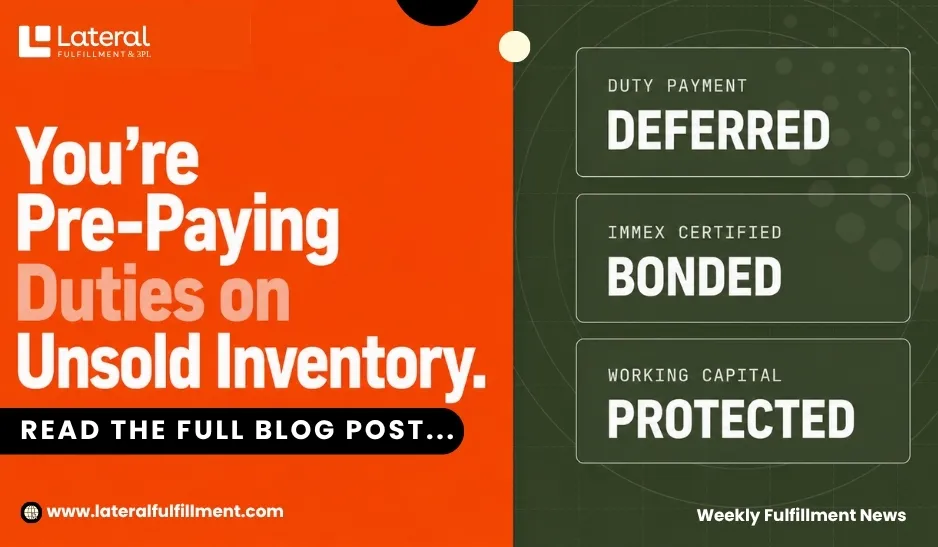
The key difference is the bonded warehouse model. When you import goods through a bonded facility, you defer import duties until your inventory actually ships to U.S. customers. You’re not paying duties on your entire inventory the moment it crosses the border—you pay only on what you sell, when you sell it.
For a growing brand, that difference has a direct impact on cash flow:
- Deferred duties: Your capital stays in your business instead of sitting in taxes on unsold inventory.
- Lower landed costs: Proximity to the border and cross-border efficiencies reduce the cost of every shipment.
- Fast U.S. delivery: A 1 to 3 day delivery window across the U.S. keeps your customer experience competitive.
The result is the combination most brands assume they have to choose between: the delivery speed of a West Coast hub and a cost structure that protects your margins. Proximity stops being just a logistics detail and becomes a financial strategy.
Choosing the Right West Coast 3PL Partner
Moving to a new warehousing strategy is a big decision. When you look for a west coast 3PL, you’re not just renting shelf space—you’re hiring a partner to deliver on your brand’s promise to the customer.
Look for fulfillment services that offer:
- Scalability: The ability to handle your daily volume and seasonal Q4 spikes without losing accuracy.
- Technology Integration: Direct connections to your shopping carts (Shopify, WooCommerce, Amazon) for automated order processing.
- Transparent Billing: Clear, upfront pricing on storage, pick-and-pack fees, and shipping rates so you can forecast costs accurately.
- Fast Turnaround: Clear Service Level Agreements (SLAs) that guarantee quick turnaround and shorter transit times.
Conclusion
When delivery speed directly affects how people buy, sticking with an outdated single-warehouse model can limit your growth. West coast fulfillment helps you compete. Smart inventory placement lets you deliver faster, lower your shipping cost, and improve your fulfillment operations.
And if your priority is protecting margins while keeping delivery fast, it’s worth looking past the traditional California hubs to the San Diego–Tijuana corridor—where proximity to the border and a bonded warehouse model turn West Coast fulfillment into a real financial advantage. Whether you import heavily from Asia or just want to serve your western customers better, expanding to the West Coast is a proven strategy for long-term ecommerce growth.
Want to learn more? Book your free consultation call https://info.lateralfulfillment.com/meetings/jorge-perez9